
CEO Autumn 2026 Update

Bright futures after an outstanding exam season
Our bursary access programme has long helped young people turn ambition into achievement, and this year's leavers are no exception.
At A-Level
19% achieved the highest standard, securing three A-levels graded A-B*, including 10 SpringBoarders who achieved A*/A grades (or equivalent) across the board
61% achieved three A-levels or equivalent qualifications at grades A-C*
98% secured at least two A-levels (or equivalent) passes, compared with 86% nationally.
At GCSE
70% achieved Grade 5 or above in both English and Maths, compared with 26% nationally
63% of all GCSE results were graded 7 or above, compared with 21.8% nationally
66% secured five or more GCSEs at Grade 5 or above.
SpringBoarders in the Class of 2026 are progressing to an impressive range of destinations, including Oxford, King's College London, Bath, Bristol, Manchester, Dartmouth College (USA) and several medical schools, as well as apprenticeships and exciting new career opportunities.
85% of those completing their bursary placements are progressing to university, with 39% attending high-tariff universities or medical schools.
Two students have secured apprenticeship opportunities, while others are taking gap years to strengthen their qualifications before continuing their studies.
Many are pursuing passions discovered during their bursary placements, including careers and degrees in aerospace engineering, educational psychology, neuroscience, computer game development, finance and sailing.
Perhaps most strikingly, none of the care-experienced young people in this year's cohort are currently not in education, employment or training (NEET). All but two are progressing to university. One has chosen to enter employment to pursue a career in hospitality, while another has begun an apprenticeship. Each is taking an exciting and positive next step towards independence and success and these outcomes are in stark contrast to the national picture of around 36% of care leavers not in employment or any form or education or training.

New beginnings
Alongside celebrating our leavers, we have spent the summer preparing 165 children & young people to begin fully funded bursary places across our partner school network. This is the largest new intake that we have ever secured places for and represents a particular growth in the number of children in care securing day school places that allow for them to remain with their foster or kinship carers.
All have taken part in RNCSF or our partner-supported transition programmes, including many participating in a week-long residential at the UK Sailing Academy, where staff and alumni help pupils prepare for challenges such as homesickness, adapting to boarding life, building resilience and developing confidence. Others joined online sessions with alumni mentors, who shared their own experiences of transitioning to boarding and independent day schools, offering practical advice and reassurance as pupils prepare to settle and thrive.
We are also beginning a month-long tour across the country to meet more than 225 applicants whose cases have been reviewed and triaged over the summer. This is a substantial increase on previous years as our regional hubs continue to gain traction, and the team has done a remarkable job processing such high volumes. With growth concentrated within the day-school applicant pool, there is good reason to remain optimistic with many independent day schools eager to commence new partnerships with us, to balance alongside our stable boarding school partnerships.
Alumni making their mark
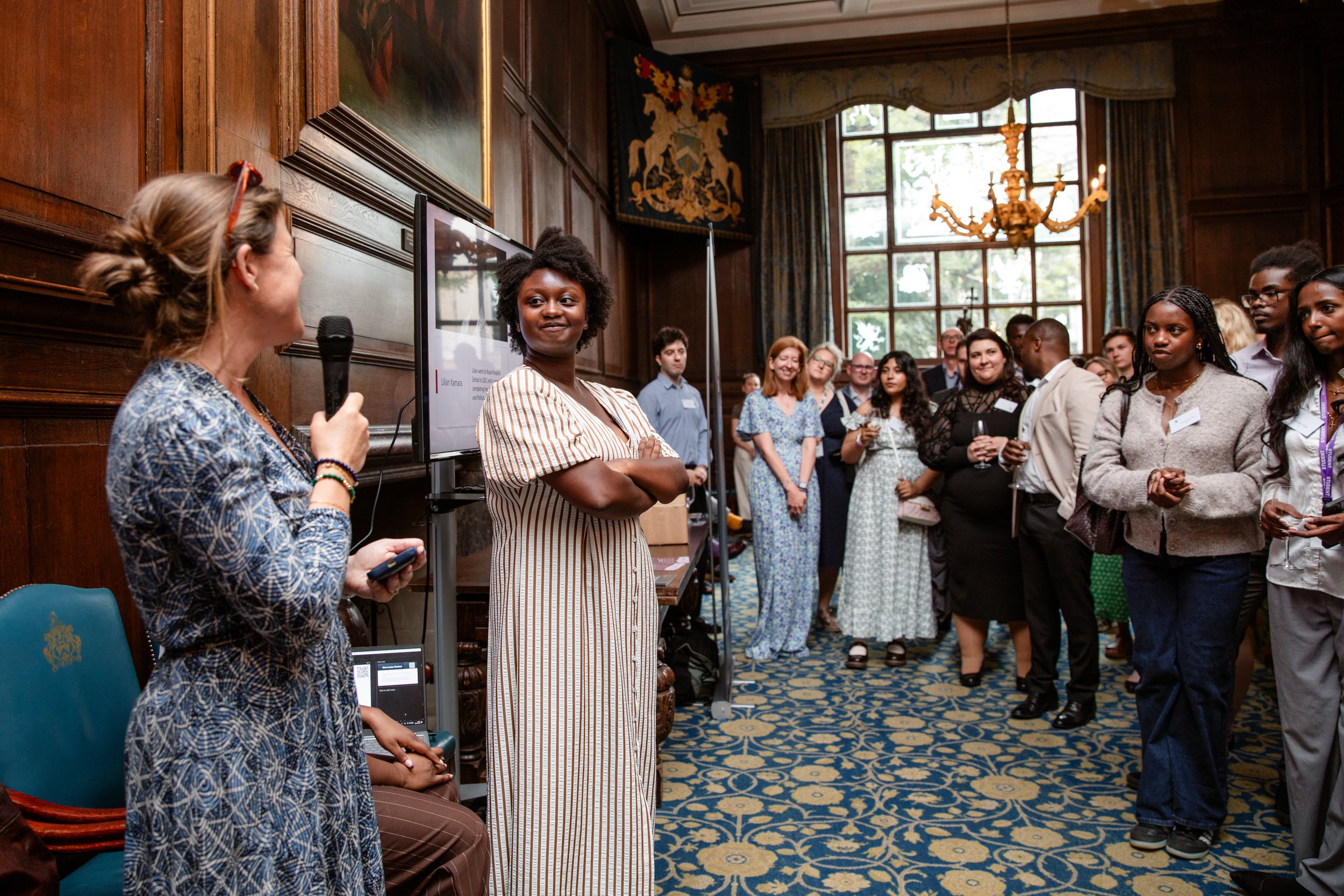
Our annual Alumni Celebration Event in late June once again highlighted the long-term impact of educational opportunity. More than a hundred new alumni mixed with older alumni and supporters to share their excitement for their next steps.
Where progressing to university, we ensure that alumni have each others’ details in order to connect and share advice on how to navigate the move to higher education.
Alumni also have opportunities to shape our work in our Youth Advisory Panel, and overall are a growing community that continues to inspire and demonstrate what can be achieved when opportunities are made available.
We’re so proud of them all, with a few highlights of the last few months including particular congratulations to:
Theodore Rodney who will start his MA in Screenwriting at the National Film and Television School. One of his films "The World We Hear" has one three awards: The Lenny Henry Diversity Award, Best Actor and Best Editing Award with multiple screenings across the UK at film festivals
Ida Saidy who has graduated from her Medical Degree at Manchester University and is now coming up to two months in her new job as a Doctor for the Manchester University NHS Foundation Trust.
Ty Gichia who completed a competitive 6-week Analyst internship at Puma Growth Partners.
Iman Osman who has secured a Laidlaw Leadership & Research scholarship at Imperial College to research th barriers and facilitators for the HPV Vaccine in adolescences living in London.
Chelsea Semou who made it to the Top Ten finalists of The 2026 Undergraduate of the Year Awards: Celebration Social Mobility representing UCL, in a field of 6,000 applicants.
Eleanor Hardaker, Harmony Johnson-Smith, Omodesire Mustapha & Jemimah Fadare-Owolabi who join the Foundation for Education Development Learners council to contribute towards national conversations/campaigns on education reform.
Expanding our Regional Hub network
This autumn we will launch our eighth Regional Hub, covering the South East of England. Regional Hubs are central to our ambition to ensure that children can access the educational opportunities best suited to their needs, regardless of where they live. They bring together local authorities, social care professionals and schools to identify appropriate bursary places and strengthen pathways into independent and boarding education.
The hubs have already played a significant role in increasing awareness of the programme, strengthening relationships with local authorities and helping schools develop more contextualised admissions approaches. They have also supported increasing use of commissioned placements, helping local authorities respond to situations where a school place is needed at short notice or where demand exceeds available bursary funding. During 2025/26, five fully commissioned placements were supported, alongside 37 placements involving significant local authority contributions.
As government seeks new ways to improve outcomes for vulnerable children, we believe this locally driven model has an increasingly important role to play.

What does a Burnham government mean for our work?
The new government has reaffirmed its commitment to delivering reform across children's social care, creating an important opportunity to build on the progress already being made through the Broadening Educational Pathways programme. With 2026/27 the final year of our current DfE contract period, our focus is firmly on how to embed this on a sustained footing long into the future. The scheme has demonstrated how boarding and independent day schools can offer better outcomes, and value for money, than other forms of children’s social care intervention. And that there are hundreds of schools that are willing to commit significant bursary funding to support this. But achieving the next stage of growth will require additional mechanisms to support scaling.
This term we are therefore continuing discussions with Ministers Macallister & Gould around several potential solutions, including
Redirecting existing education funding to support eligible children in care to access more independent school places.
Exploring ways to make boarding provision more accessible to vulnerable children who would benefit from the stability it can offer – through both the Continuity of Education Allowance mechanism as well as operationalising the Independent Review into Children’s Social Care recommendation for the creation of additional state boarding capacity through partnerships with leading academy trusts.
Partnerships that support innovative approaches to increasing foster care capacity from within the RNCSF schools’ and alumni community.
Across all of this work, our objective remains unchanged: to ensure many more vulnerable children can access the educational opportunities, stability and support they need to thrive.

Thank you for helping us create brighter futures for hundreds of children and young people every year.
Together, we look forward to the next year with optimism!