
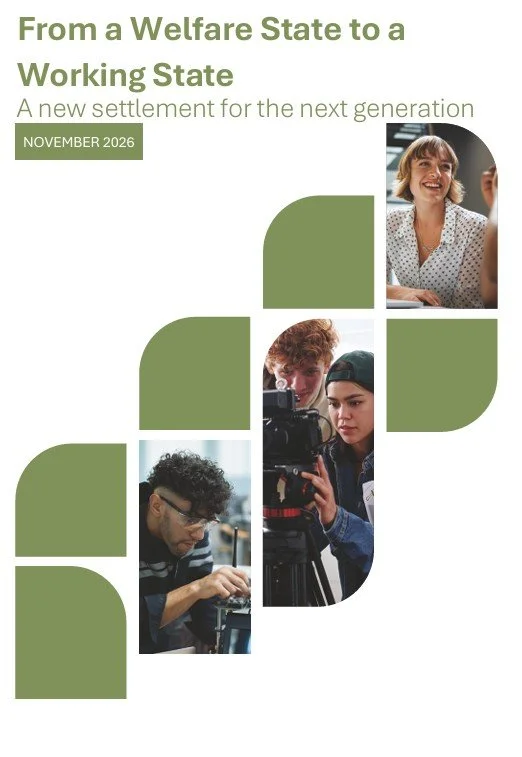
New national thinking reflects the principles at the heart of RNCSF's strategy
The publication of Alan Milburn's review, From a Welfare State to a Working State: A New Settlement for the Next Generation, has brought renewed attention to one of the most pressing challenges facing young people today: the growing number who are not in education, employment or training (NEET). With almost one million young people aged 16-24 currently falling into this category, the Review calls for a more ambitious and coordinated response.
While much of the debate has focused on employment, the Review's central message is broader. It argues that disengagement is often rooted in earlier experiences of instability, disadvantage and a lack of coordinated support. Education, wellbeing and opportunity all play a role in shaping future outcomes.
For Royal National Children's SpringBoard Foundation (RNCSF), this message resonates strongly with our own experience and the priorities set out in our 2025-2030 Strategy.
Looking Beyond the NEET Statistic
The Review challenges the idea that becoming NEET is simply an employment issue. Instead, it highlights the barriers that can affect young people's lives long before they leave education, including disrupted schooling, poor mental health, care experience and poverty.
For nearly 200 years, RNCSF has supported children and young people facing significant adversity. Our experience has shown that long-term outcomes are shaped not only by academic attainment, but by access to stability, supportive relationships and opportunities to thrive.
These foundations help young people remain engaged in education and develop the confidence and resilience needed for successful transitions into adulthood.
The Importance of Early Intervention
A key theme of the Review is the need to identify and support young people before they become disengaged.
At RNCSF, we see the impact of this approach every day. Through bursary programmes, partnerships with schools and local authorities, and transition support, we help vulnerable children access educational environments where they can flourish and fulfil their potential.
"The Milburn Review reinforces something we see every day through our work with vulnerable children and young people. Successful transitions into adulthood do not start at 16 or 18. They start much earlier, with stability, trusted relationships, educational opportunity and a sense of belonging. If we want fewer young people to become disengaged, we must invest in those foundations from the outset."
Ali Henderson, Chief Executive Officer, RNCSF
The outcomes demonstrate what can be achieved when young people are given access to the right opportunities and support. Among care-experienced young people completing RNCSF-supported placements this year, all are currently engaged in education, employment or training.
For many vulnerable children, the right educational environment provides far more than academic learning. It offers trusted adult relationships, wider opportunities and the confidence to navigate adulthood successfully.
Supporting Successful Transitions
The Review also highlights the risks many young people face as they move from school into further education, training or employment, particularly those with care experience or multiple disadvantages. Too often, support becomes fragmented at precisely the point it is needed most.
Helping young people navigate these critical years remains a central part of RNCSF's work. Successful transitions require not only educational opportunity, but also practical support, confidence and strong networks.
A Shared Ambition
The Milburn Review calls for stronger collaboration between education providers, employers, public services and local communities to improve outcomes for young people.
At RNCSF, we welcome that ambition. Lasting change requires schools, local authorities, charities, employers and policymakers working together to create the conditions in which young people can succeed.
The national conversation prompted by the Milburn Review is an important reminder that improving outcomes is about more than employment alone. If we want fewer young people to become disengaged from education, employment and training, the answer begins much earlier by ensuring children and young people have the support, opportunities and foundations they need to build positive futures.